Moving plumbing on a slab: what changes?
On a slab foundation the drain runs inside or under the concrete, so moving a fixture means sawing the slab, trenching, and pouring it back. The same reroute that costs $1,080 to $2,250 over a crawl space lands at the top of the range and beyond on a slab; long moves run past $2,680. Plan the layout around the existing wet wall if you can.
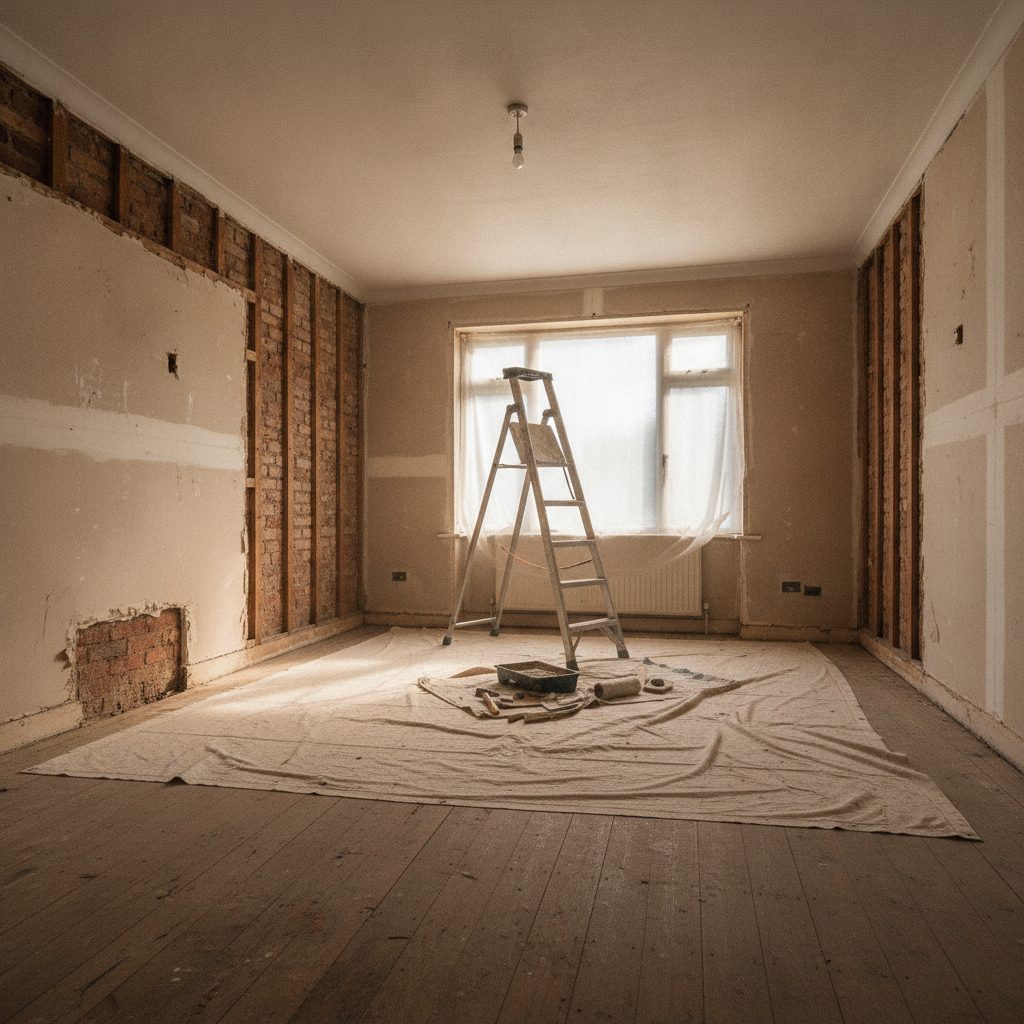
Why the slab dominates the bill
Concrete work is slow and loud: sawing the slab, digging the trench at the right slope, inspection, backfill, pour, cure, and only then the finish floor. None of that exists over a basement or crawl space, where the same pipes hang in open air.
The smart move: test layouts first
Before you fall for a floor plan, drag it out in the free bathroom planner: keep the toilet and sink near the existing drain and the whole question disappears. The planner shows the cost consequence of every extra foot, live. For the toilet specifically, see what it costs to move a toilet.
Frequently asked questions
How do I know if my house is on a slab?
No basement and no crawl space usually means slab-on-grade, common across the Sun Belt. Step outside: if the floor sits close to grade with no vents or access panels along the foundation, it is most likely a slab.
What are the alternatives to cutting the slab?
Three: keep fixtures on or near the existing wet wall; build the floor up so the new drain runs above the slab (costs ceiling height); or use a macerator pump that grinds and pumps waste through a small line. Each has trade-offs a good plumber will walk you through.
Is a macerator pump a real solution?
It is a legitimate tool for a hard-to-drain spot: cheaper to install, but it makes noise, needs power and maintenance, and some local codes restrict where it may discharge. Fine for a secondary bath, think twice for the main one.