Buying a house to renovate? Price it before you offer
A doer-upper is two purchases in one: the house and the works. The buyers who do well price both before the offer; the ones who do not, discover the second price after the keys. Four steps, all free.
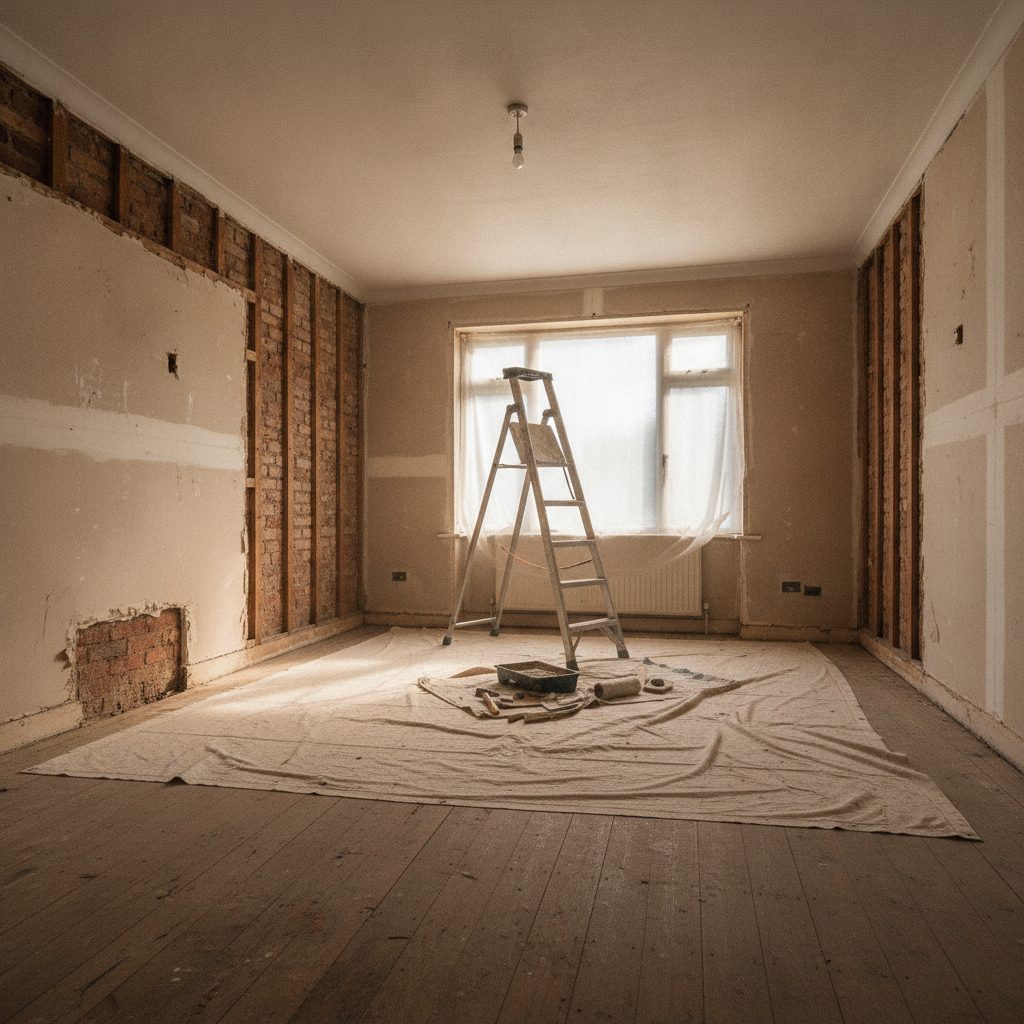
Price this house on the viewing
The house on the EPC register
Type the postcode and house number and the official EPC register returns the construction age band and floor area; every home on the market must have an EPC. Your input travels through our server to the register for that one lookup and is not stored anywhere. The scan works without it too.
What would you take on?
A label for your own list; it never leaves this device.
The four steps before your offer
- 1. Survey before you commit: a RICS Level 3 survey on anything old or altered. It turns "probably fine" into a list of facts, and every fact is negotiation material.
- 2. Price the works: run the rooms through the free calculator and the cost guides, add 10 to 15 percent contingency, and treat offer plus works as the real price.
- 3. Sort the money with the purchase: most lenders lend against the current value, not the finished one; the routes are mapped in how to pay for a renovation.
- 4. Check the rules before you dream: the free planning check tells you in seven questions whether that extension or loft fits permitted development; flats and listed buildings play by stricter rules, and leaseholders also need the freeholder's consent.
After the keys
The order of works is where doer-uppers win or lose money: structure and damp first, then wiring and plumbing, plaster, and finish last; paying twice for redone work is the classic mistake. The full house renovation guide covers the sequencing, and the budget planner shows when each payment falls due.
Survey back with rating 2s and 3s? Turn the ratings into figures before you renegotiate.
Frequently asked questions
Which survey do I need for a doer-upper?
For an older or visibly altered property, a RICS Home Survey Level 3 (the full structural survey); Level 2 suits more standard homes. On a house you plan to open up, the Level 3 is the cheapest insurance you will ever buy: it finds the damp, structural and roof issues that decide your real budget.
Should I price the renovation before making an offer?
Yes, always: your offer plus the works plus 10 to 15 percent contingency is the real price of the house. Price the works in minutes with the free calculator and the cost guides, then let the survey refine it. Buyers who price after offering negotiate against themselves.
Can the mortgage cover the renovation too?
Sometimes: some lenders offer more against a property with works planned, occasionally released in stages, but most lend against the current value, not the finished one. Talk to a whole-of-market broker before you offer; the financing routes are mapped in our how-to-pay guide.
What should I check on a leasehold flat?
Two extra gates: flats have no permitted development rights, so extensions and lofts need planning permission, and leaseholders usually also need the freeholder's consent (a licence to alter) for anything structural. Check both before you offer, not after.