What does a rear extension cost in London?
In London: £60,000 to £90,000 for a typical 20 m2 project for a Single storey version at mid-range, including 20% VAT, against £48,000 to £72,000 nationally. Budget starts around £51,000 (Single storey), premium runs to £126,000 (Single storey). Set your own size, finish and region below, no email required.
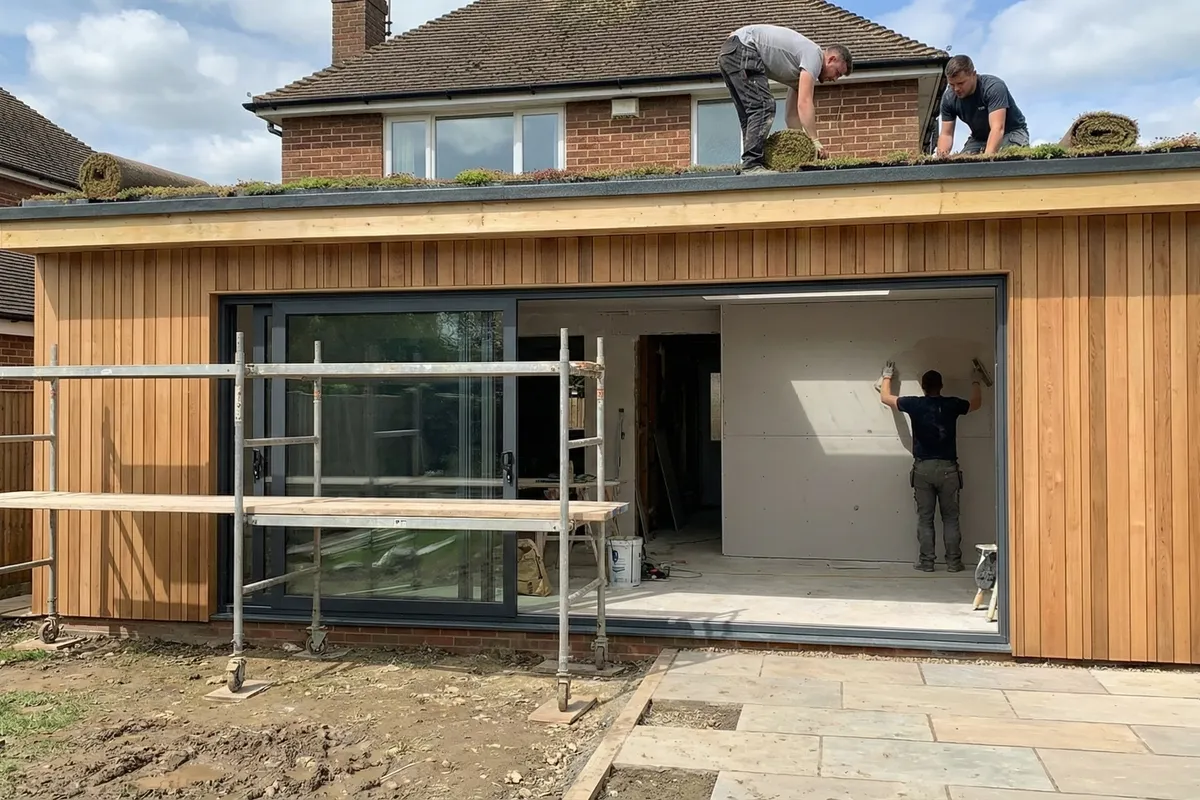
- Single storey: £60,000 to £90,000 mid-range
- Double storey (per m2 of floor area, both floors): £60,000 to £85,000 mid-range
What the sources say
Checkatrade, House Extension: Cost Breakdown: £1,800 to £3,000
per m2, stated excluding VAT; x1.20 gives £2,160-3,600 including VAT. Prices stated excluding VAT. Guide dated 2026-06, opened and checked 2026-08-26.
HomeOwners Alliance, House Extension Costs: £1,800 to £3,000
per m2 excluding VAT; London £2,300-3,400 per m2. Prices stated excluding VAT. Guide dated undated, opened and checked 2026-08-26.
MyJobQuote, Single Storey Extension Cost: £1,000 to £2,200
average £1,700 per m2; a 20 m2 extension £20,000-44,000. The guide does not state its VAT treatment. Guide dated 2026-06, opened and checked 2026-08-26.
The national range at the top of this page is chosen inside the spread these guides publish, converted to include 20% VAT where a guide states its prices exclude it. Where guides disagree, both figures stay visible above so you can judge for yourself.
Rear extension (Single storey), mid-range, London
£60,000 to £90,000
Including 20% VAT. An indication, not a quote: prices vary per trade and property.
Take it further
Nothing here is saved unless you ask. With a free account you can keep this estimate and come back to it later.
Prices include 20% VAT. New builds and some energy-saving works can qualify for 0% or reduced VAT; ask your installer.
On top of whatever you agree with a builder, set aside a contingency of 20% for the unforeseen: structural work on the existing building carries the most unknowns; guidance puts these projects at the top of the contingency range or above. How much contingency you need explains the guidance.
Extensions and loft conversions often fall under permitted development. Check before you budget.
What drives the price
- Size and storeys: per square metre a double storey is slightly cheaper, in total it is not.
- Glazing: bifolds, sliders and rooflights are beautiful, expensive line items.
- The knock-through: opening the back wall needs steels and building control.
- Kitchen inside the extension: most rear extensions are really kitchen projects too.
All figures come from the same validated 2026 price data as the calculator above, built on the sources listed higher up on this page, each opened and checked on 26 August 2026 (see how we price), so this page and your estimate can never disagree. Outside London? See the national guide, or compare every region in the regional overview. How to pay for it (remortgage, loan or savings) is its own guide: paying for a renovation. Planning an extension or loft? Check permitted development first. Weighing a cheaper glazed room instead? The conservatory guide prices every size and explains why the regs exemption makes it cheaper.
Frequently asked questions
Does a rear extension need planning permission?
Often not: single-storey rear extensions within 3 m (attached) or 4 m (detached) usually fall under permitted development in England, with a prior approval route up to 6 or 8 m. Our free planning check walks you through it in six questions.
What should I do first?
Three steps, in this order. First, turn the guide range above into your own number: the calculator on this page adjusts for size, finish level and region in under a minute, free and without email. Second, if the layout matters, bathrooms and kitchens especially, draw the room to scale in the free planner; moving plumbing is usually the biggest hidden cost, and you want to know that before anyone quotes. Third, get at least three itemised quotes and compare them line by line against your range before you commit; the quote check on this site gives you an honest verdict per quote.
Do these prices include VAT?
Yes, all ranges include 20% VAT. New builds and some energy-saving works can qualify for 0% or reduced VAT; ask your installer whether your project applies.
Why is London so much more expensive?
Labour is the driver: London trades charge roughly 25% above the national average, and parking, access and waste logistics add friction. Nationally this project runs £48,000 to £72,000; the calculator switches region in one click.
How accurate is this range?
It is a guide range from national 2026 cost guides, adjusted for finish level and region. Real quotes vary per trade, property and specification; treat it as a starting point, budget 10 to 15 percent contingency, and always get at least three itemised quotes.